




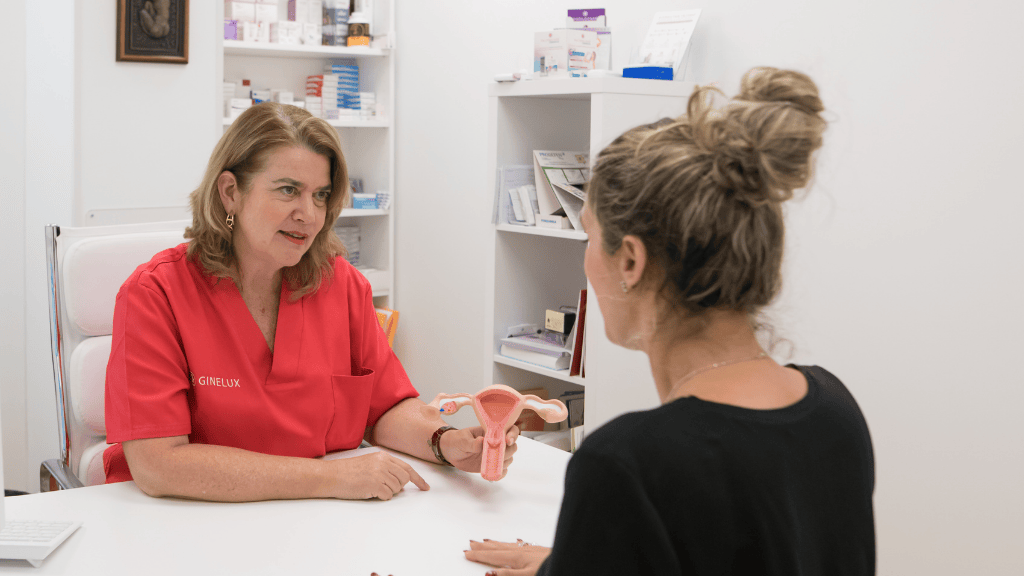
Discovering that you have uterine fibroids can generate a mixture of concern and confusion. They are one of the most frequent alterations among women who go for a gynecological check-up, and yet they are still surrounded by myths and unanswered questions. Knowing exactly what uterine fibroids are, when to act and when to simply observe, makes a huge difference in the quality of life and in the decisions each woman makes about her health.
At Ginelux, a gynecological clinic in Las Palmas de Gran Canaria with a practice in Telde and surgeries and deliveries in Las Palmas, we regularly receive patients from all over the island who arrive with this diagnosis and many questions. This article answers, with rigor and without unnecessary technicalities, the most common doubts about the symptoms of fibroids, the treatment of fibroids and when it is time to consult a private gynecologist.
What are uterine fibroids and why do they appear?
Fibroids are benign growths that form in the muscle of the uterus. They are also called fibroids or leiomyomas, and their non-cancerous nature is one of the most important facts to be clear about from the beginning. They are not malignant tumors and in many cases do not cause any symptoms.
Their exact origin is not known with complete precision, but it is known that estrogens and progesterone influence their development. That is why they appear more frequently during the reproductive years and tend to reduce after menopause, when hormone production naturally decreases.
There are different types depending on their location within the uterus. Subserosal fibroids grow towards the outside, intramural fibroids develop within the muscular wall and submucosal fibroids grow towards the interior cavity of the uterus. This distinction is important because the location directly influences the symptoms of fibroids that may appear and the treatment options available.
Symptoms of fibroids: when to pay attention
Many women with uterine fibroids do not experience any discomfort. However, when symptoms do appear, they should be recognized so that consultation with a specialist is not delayed.
The most common symptoms of fibroids include very heavy or prolonged menstruation that interferes with daily life, persistent pelvic pain within or outside the cycle, a feeling of pressure in the lower abdomen, frequent urination and, in cases of sustained heavy bleeding, anemia with chronic fatigue and lack of concentration.
In women who wish to become pregnant, submucosal fibroids in particular may make embryo implantation difficult or increase the risk of delivery premature. Therefore, if you have any of these symptoms, seeing a gynecologist in Las Palmas de Gran Canaria is the first step to obtain a clear diagnosis.
If you recognize any of these signs, our section of general gynecology provides detailed information on how we approach each case.
When uterine fibroids don't need treatment and when they do
Do you have doubts about whether your fibroids need treatment? In this table we explain clearly when it is necessary to act and when only gynecological follow-up is sufficient.
| Situation | When treatment is NOT needed | When they DO need treatment |
|---|---|---|
| Symptoms | No discomfort or impact on daily life | Heavy bleeding, pelvic pain or symptoms that affect quality of life |
| Size and evolution | Small and stable myomas over time | Progressive growth or large size |
| Impact on health | No associated complications | Anemia or other related complications |
| Desire to pregnancy | No short-term pregnancy planning | Difficulty in achieving pregnancy or planning for the near future |
| Recommended approach | Periodic gynecological follow-up | Medical or surgical treatment depending on the case |
Treatment options for uterine fibroids
When the symptoms of fibroids really affect the quality of life, treatment is no longer an option but a necessity. The choice depends on the size, location, symptoms and desire for pregnancy. These are the main treatment options for uterine fibroids:
| Type of treatment | Description | When is it recommended |
|---|---|---|
| Medical treatment | Drugs that temporarily reduce size or control symptoms | Mild cases or as first line of treatment |
| Myomectomy | Surgery to remove the fibroids while preserving the uterus. | Women who wish to maintain fertility |
| Hysterectomy | Removal of the uterus | Severe cases without reproductive desire |
At Ginelux we have a team specialized in gynecological surgical procedures. You can consult the available options in our section of gynecological surgeries.
Fibroids and fertility: what the studies really say
This is one of the issues that most concerns women of reproductive age who consult with gynecologists in Las Palmas. The honest answer is that it depends. Not all fibroids affect fertility. The ones that are most frequently associated with difficulties in conceiving are those that distort the uterine cavity, especially the submucous ones.
However, many women with intramural or subserosal fibroids become pregnant without any problem. Individualized evaluation is key, and there is no universal answer because each case has different characteristics.
If you are thinking of seeking pregnancy and have diagnosed fibroids, it is wise to consult with a gynecologist in Gran Canaria before you begin. The Ginelux team, made up of specialists with extensive experience in obstetrics, can guide you as to whether or not your fibroids represent a relevant factor in your particular case.
Common mistakes to avoid
There are some common errors in women diagnosed with uterine fibroids that can affect both the evolution of the problem and decision-making. Knowing them is the key to acting with criteria.
Operating without symptoms or real need
- Consider surgery as a preventive measure
- No discomfort or limitations in day-to-day life
- Believing that “getting it out of the way as soon as possible” is always the best option
The reality is that not all fibroids require surgery.
Intervention is only indicated when symptoms or risks clearly justify treatment.
Ignoring symptoms for too long
- Prolonged heavy menstrual bleeding
- Persistent pelvic pain
- Associated fatigue or weakness (possible anemia)
Delaying the consultation may worsen the clinical picture.
A timely assessment allows for less invasive treatments and improved quality of life.
Information only on the Internet without medical advice
- Basing decisions on forums or testimonials
- Comparing cases without clinical context
- Generate fear or false expectations
Each case is unique:
- Each myoma has different characteristics
- Each patient requires a customized approach
Therefore, online information should always be a complement, never a substitute for medical consultation.
How is it diagnosed and what to expect at the gynecological consultation?
The diagnosis of uterine fibroids is usually simple. Transvaginal ultrasound is the most commonly used tool and allows the size, number and location of the fibroids to be visualized with good precision. In some cases it can be supplemented with an MRI or sonohysterography to obtain greater detail.
At the first gynecological examination, the specialist collects information on symptoms, menstrual cycle, reproductive history and other relevant history. From there, it can be established whether the detected fibroids warrant follow-up, medical treatment or intervention.
The Ginelux medical team, comprised of Dr. Ramón Santana García, medical director with training in gynecology and obstetrics, along with Dr. Mónica Álvarez Sánchez, Dr. Eleazar Bravo Moreno, Dr. Elena Torres Castellano, Dr. Rosa Rodríguez de la Mano, Dr. Lucía González Sánchez and Dr. Marta de Luis, offers personalized attention adapted to each clinical situation.
Many of our patients come from Las Palmas, Maspalomas, Playa del Inglés, Agaete or the north of Gran Canaria and find in our gynecologist's office in Telde a place to solve their doubts calmly and rigorously.
Regular gynecological check-up: the best prevention tool in Gran Canaria
The early detection of uterine fibroids depends to a great extent on maintaining regular gynecological check-ups. Not waiting for symptoms to go to a specialist is one of the most important preventive decisions a woman can make.
In Gran Canaria, where many women combine work, family and distances between municipalities, it is not always easy to maintain regular check-ups. However, an annual or biennial ultrasound can detect changes early and prevent something manageable from becoming a major problem.
Whether you live in Las Palmas de Gran Canaria, Telde, Vecindario, Maspalomas, Agaete or any other part of the island, having a gynecological clinic in Las Palmas of reference facilitates this continuous monitoring. The care provided by the same team over time makes it possible to detect changes in the evolution of fibroids much more effectively than isolated consultations.
When choosing a private gynecologist in Gran Canaria, one of the most valued factors is precisely that continuity: always being able to consult with the same specialist who knows your history, understands your priorities and can compare ultrasounds from different times with real clinical criteria.
Gynecologists in Las Palmas specializing in uterine fibroids
The treatment of fibroids requires a specialized approach that goes far beyond the initial diagnosis. Gynecologists in Las Palmas with specific training in uterine pathology can guide you through all the available options, from non-interventional follow-up to minimally invasive surgical techniques, with the aim of adapting the decision to your personal situation and your future plans.
At Ginelux, as a gynecological clinic in Las Palmas of reference for patients from all over Gran Canaria, we offer each woman a multidisciplinary team that combines clinical experience, updated diagnostic technology and an attention that respects the time and uncertainty of each consultation.
If you want to know if your fibroids require attention or if you simply need a complete gynecological check-up with a gynecologist in Las Palmas de Gran Canaria, we are here to help you.
Frequently asked questions about uterine fibroids
Can uterine fibroids disappear on their own?
Is surgery mandatory if I have uterine fibroids?
What is the difference between going to a private gynecologist and going to the public health system for treatment of fibroids?
Do fibroids always affect pregnancy?
How long is the recovery time after fibroid surgery?
Make your appointment with the gynecologist at Ginelux
If you have diagnosed uterine fibroids and want to know if they require attention, if you have had symptoms for some time that you have not consulted, or if you simply want a complete gynecological checkup with a gynecologist in Las Palmas de Gran Canaria, you can contact our team at contact form.
We will attend you with the time and attention that your case deserves.