




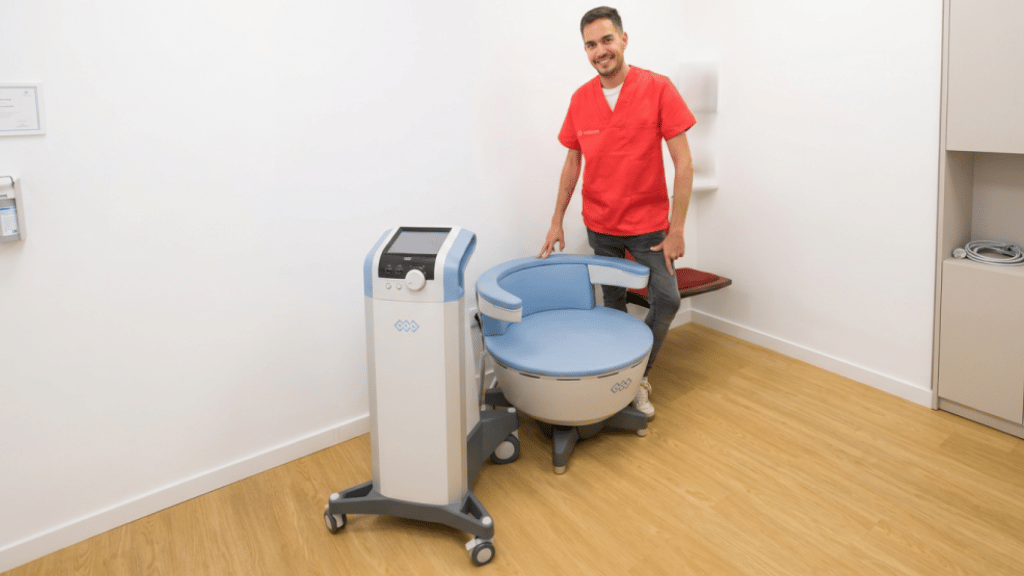
Urinary leakage when laughing, running, or sneezing is more common than many women realize. The Emsella Chair has become one of the best-known treatments for strengthening the pelvic floor without surgery and helping women who experience symptoms related to female urinary incontinence or pelvic floor muscle weakness.
More and more patients in Las Palmas, Telde, Vecindario, Maspalomas, Playa del Inglés, Agaete, and other municipalities in Gran Canaria are seeking information about this treatment. Understanding how Emsella works and in which cases it may be appropriate is the first step toward making informed decisions about women’s intimate health.
What is the Emsella Chair?
The Emsella chair It is a device designed to intensely stimulate the pelvic floor muscles using high-intensity electromagnetic technology.
During the session, the patient remains seated on the machine, fully clothed. The technology generates thousands of deep muscle contractions designed to strengthen structures that are often difficult to target through voluntary exercise alone.
The treatment is designed to improve the function of the pelvic muscles, an area that is essential for urinary control and support of the pelvic organs.
Why does the pelvic floor weaken?
The pelvic floor is a group of muscles and tissues that supports organs such as the bladder, uterus, and rectum. When these muscles weaken, various symptoms may appear that affect quality of life. Among the most common causes of pelvic floor weakness are:
- Pregnancy y delivery.
- Menopause.
- Natural aging of tissues.
- High-impact sports.
- Overweight.
- Chronic cough or repeated exertion.
- Previous surgeries in the pelvic area.
The loss of muscle strength does not always cause immediate symptoms, but over time it can lead to urinary incontinence, a feeling of heaviness in the pelvis, or difficulty controlling certain physical activities.
| Frequent situation | What a woman might notice | Why It's Important to Assess the Pelvic Floor |
|---|---|---|
| After Pregnancy or Childbirth | Urinary leakage, a feeling of weakness, or pelvic pressure | There may be a loss of muscle strength or impaired function |
| Menopause | Urinary urgency, increased frequency, or urine leakage | Hormonal changes can affect supportive tissues |
| High-impact sport | Urinary leakage when running, jumping, or exerting yourself | Repeated increases in abdominal pressure can strain the pelvic floor |
| Chronic cough or repeated exertion | Leakage when coughing, laughing, or lifting weights | Pressure on the bladder may exceed the urethra's ability to close |
| Pelvic Floor Weakness | A feeling of having less control or a lack of support | An evaluation helps determine the most appropriate treatment |
Female Urinary Incontinence and Urine Leakage in Women
Female urinary incontinence is a condition that affects women of all ages. However, many patients wait years before seeking medical help because they feel embarrassed or believe it is an inevitable consequence of childbirth or the natural aging process.
Stress urinary incontinence occurs when abdominal pressure exceeds the urethra's ability to close. It happens when you laugh, cough, sneeze, run, or lift something heavy.
Urinary leakage while running or laughing is particularly common among active women and athletes, who are often unaware that specific treatments exist to address this problem. The impact isn’t just physical. Female urinary incontinence affects self-esteem, social life, and activities that were once completely normal.
In Las Palmas and throughout Gran Canaria, the Ginelux team—composed of gynecologists such as Ramón Santana García (medical director), Mónica Álvarez Sánchez, Eleazar Bravo Moreno, Elena Torres Castellano, Rosa Rodríguez de la Mano, Lucía González Sánchez, and Marta de Luis, cares for women seeking a specialized pelvic floor evaluation and clear guidance on their options.
How does the Emsella treatment work?
Emsella technology generates supramaximal contractions of the pelvic floor muscles. These contractions are designed to stimulate the muscles involved in urinary control and in supporting the pelvic organs.
Unlike other procedures, this is a pelvic floor treatment that requires no surgery, no anesthesia, and no recovery period.
After each session, the patient can resume her normal activities, which has helped make this treatment increasingly popular among women seeking non-invasive options to strengthen their pelvic floor.
Pelvic Floor After Childbirth
Pregnancy and childbirth cause significant physical changes in the pelvic muscles and tissues. Although recovery varies from woman to woman, some patients may experience:
- A feeling of muscle weakness.
- Occasional urine leaks.
- Reduced bladder control.
- A feeling of pressure in the pelvis.
For this reason, pelvic floor assessment after childbirth is part of routine gynecological care. An individualized evaluation helps determine which measures may be most appropriate in each case.
Menopause and Urinary Incontinence
Menopause can also affect pelvic floor health. The hormonal changes associated with this stage can affect the tissues that help support the bladder and urethra. As a result, some women begin to experience symptoms such as:
- Increased urinary frequency.
- Urge to urinate.
- Urinary incontinence.
- A sensation of muscle weakness.
As part of a comprehensive approach, it is common to combine various strategies aimed at promoting women’s intimate well-being.
Emsella and pelvic floor exercises: What are the differences?
Pelvic floor exercises for women, commonly known as Kegel exercises, remain one of the most widely used methods for strengthening these muscles. However, many patients have difficulty correctly identifying the muscles they need to engage or maintaining a consistent routine over time.
Emsella technology is not necessarily intended to replace these exercises, but rather can be part of a comprehensive strategy to improve pelvic floor function based on each patient's needs.
For this reason, an evaluation by a gynecologist who specializes in pelvic floor health is essential before deciding on any treatment.
Does Emsella work?
One of the most frequently asked questions is whether Emsella really works. The answer depends on a number of factors, such as the diagnosis, the degree of muscle weakness, lifestyle habits, and each patient's individual characteristics.
For this reason, it is important to have realistic expectations and to understand that no treatment produces the same results for everyone.
The best way to determine whether a patient can benefit from this technology is to perform a comprehensive gynecological evaluation and determine whether the cause of her symptoms is related to a functional disorder of the pelvic floor.
How many Emsella sessions are typically performed?
Another common question is how many Emsella sessions are needed. There is no single answer because each case requires an individualized treatment plan. The number of sessions may vary depending on symptoms, treatment goals, and the progress observed during treatment.
For this reason, the guidelines recommended by the specialist monitoring the patient should always be followed.
Pelvic Floor Treatment in Las Palmas and Gran Canaria
Pelvic floor health has become increasingly important in recent years. More and more women in Las Palmas, Telde, Vecindario, Maspalomas, Playa del Inglés, Agaete, and other municipalities in Gran Canaria are seeking alternatives to address issues related to female urinary incontinence and intimate well-being.
In this context, an assessment by specialized professionals makes it possible to examine each situation on a case-by-case basis and determine which options may be most appropriate.
At Ginelux, the gynecology team is involved in providing comprehensive gynecological care for women, including issues related to the pelvic floor, menopause, and women’s intimate well-being.
In addition, some patients supplement their evaluation with other treatments related to intimate health and regenerative gynecology: Regeneration and Intimate Wellness y Surgery and intimate rejuvenation.
Frequently Asked Questions About the Emsella Chair
Is the Emsella Chair only used for urinary incontinence?
Does the Emsella Chair require surgery?
Can Emsella be performed after childbirth?
Does Emsella replace Kegel exercises?
Who should evaluate a pelvic floor treatment?
Treatment for Female Urinary Incontinence in Las Palmas
Female urinary incontinence should not be considered an inevitable consequence of aging, childbirth, or menopause. There are various treatment strategies that can help improve symptoms depending on the cause and each patient’s specific circumstances. The first step is always to obtain an accurate diagnosis and assess the condition of the pelvic floor through a specialized consultation.
If you're looking for information about the Emsella Chair in Las Palmas or Telde, or if you'd like to learn about your options for strengthening your pelvic floor and addressing urinary incontinence, a personalized gynecological evaluation will help determine the best approach for your situation.