




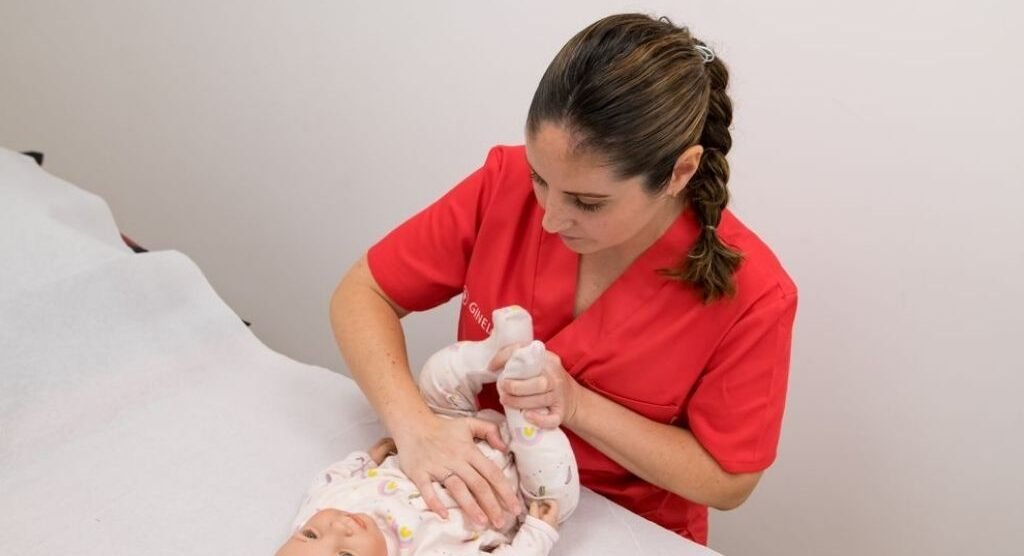
Children's motor development does not follow a single rhythm. Each child progresses in his or her own way, and in this process, families may have doubts about movement, posture or the way in which their child relates to his or her environment. In this context, infant physiotherapy has become an increasingly valued support to accompany the growth of babies and children in a respectful and personalized way.
Talking about physiotherapy in children does not necessarily mean talking about problems or pathologies. In many cases, it is an accompanying tool that helps to promote children's motor development, detect small difficulties in time and offer guidance to families from a preventive point of view.
What is child physiotherapy and what is it for?
Child physiotherapy, also known as pediatric physiotherapy, is a discipline aimed at accompanying the development of the child's movement and functionality from the first stages of life. Its objective is not to force milestones or accelerate processes, but to respect the individual rhythm of each child and promote a balanced development.
Through observation of movement, posture and the way in which the child interacts with his or her environment, infant physiotherapy can identify aspects of psychomotor development that may benefit from professional support. This approach is particularly useful during the early years, when the neuromotor system is in the process of maturing.
Physiotherapy in children and infants: movement as the basis of development
Movement is one of the main learning pathways during infancy. From head control to crawling, walking to balance, each stage of infant motor development builds the foundation for future skills.
Infant physical therapy pays special attention to these early stages, helping families understand how to encourage spontaneous movement, exploration and autonomy. In older children, toddler physical therapy may focus on aspects such as coordination, postural control or how to move in everyday life.
To speak of children's physiotherapy for motor development is to speak of accompanying, not to intervene in an invasive way. The work is always adapted to the age, abilities and real needs of the child.
When it may be advisable to visit a children's physiotherapist
One of the most common questions among mothers and fathers is when to go to child physiotherapy. There is no single answer, since each child is different, but there are situations in which an assessment by a professional can provide peace of mind and guidance.
Some times when families often inquire about children's physical therapy are:
- Doubts about motor development in infants
- Delays in the acquisition of certain milestones (sitting, crawling, walking).
- Maintained postural preferences
- Balance or coordination difficulties
- Frequent falls or clumsiness in movement
- Need for guidance on early stimulation
In many cases, preventive child physiotherapy helps to resolve doubts, accompany the natural process of development and avoid unnecessary worries.
Common signs that families can consult (without alarming)
It is important to clarify that consulting does not imply that there is a problem. When children's physiotherapy is necessary, it usually arises from the daily observation that families make of their children.
Some signs that often generate parental consultations to child physical therapists are:
- Marked differences between the two sides of the body
- Little movement initiative
- Difficulty in maintaining certain postures
- Rapid fatigue when playing or moving
- Insecurity when running or jumping
These situations do not always indicate infantile motor retardation, but a pediatric physiotherapy assessment can help to better understand the child's developmental stage.
The role of child physiotherapy in pediatric follow-up care
Physiotherapy for children does not replace the pediatrician, but is integrated within the pediatric follow-up and overall child health care. The coordinated work between professionals allows a more complete vision of the child's development.
Within the follow-up of child development, pediatric physiotherapy provides a specific look at movement, postural control in children and the way in which the child relates to his or her physical environment. This collaboration is particularly valuable when preventive and personalized care is sought.
Physiotherapy for children and support for families
One of the most important values of children's physiotherapy is the accompaniment of families. Beyond the sessions, the work includes guidance, simple guidelines and recommendations adapted to daily life.
Children's physiotherapy to accompany development is not limited to the consultation space. It helps mothers and fathers understand how to encourage movement at home, how to observe the child without comparison and how to respect the child's motor learning pace. This approach reduces anxiety, strengthens family confidence and promotes a safe environment for child development.
This support is not limited to individual consultations. In many cases, it is complemented by training sessions for families, where frequent doubts about child development, movement and wellbeing are addressed. Initiatives such as the children's workshops organized by Ginelux offer practical information and support to mothers and fathers at different stages of childhood.
Preventive physiotherapy for children: a long-term perspective
Preventive child physiotherapy is increasingly used as a health tool. It is not about intervening prematurely, but about observing, guiding and accompanying when there are doubts or when families are looking for reliable information.
Prevention in childhood is based on knowledge of psychomotor development, early detection of possible difficulties and the creation of healthy movement habits from the earliest years.
Early Childhood Physiotherapy and Psychomotor Development
During the first years of life, the child's nervous and motor system is particularly plastic. Therefore, early childhood physiotherapy focuses on promoting varied, safe and adapted movement experiences.
Infant physical therapy for infants can help to better understand how the environment, play and posture influence motor learning, always from a respectful perspective.
Child physiotherapy in the context of children's health
Children's physiotherapy is part of a comprehensive approach to children's health which includes pediatrics, The aim is not to isolate movement from the other areas of development, but to integrate it within a global vision of the child. The aim is not to isolate movement from other areas of development, but to integrate it within a global vision of the child.
This approach is especially coherent when working on the basis of prevention, family education and respect for individual time.
Frequently asked questions about children's physical therapy
What is the difference between physiotherapy for children and physiotherapy for adults?
Physiotherapy for children is adapted to the child's development, age and abilities. The approach is playful, respectful and focused on accompanying development, not on classical rehabilitation.
Is infant physical therapy only for babies?
No. Physiotherapy in children can accompany different stages of childhood, from infants to school-age children, always adapting to each evolutionary moment.
Is a diagnosis necessary to go to child physiotherapy?
Not always. Many families come to resolve doubts, receive guidance or accompany the child's motor development without a previous diagnosis.
How many child physical therapy sessions are necessary?
It depends on each case. In many cases, an assessment and some guidelines are sufficient. Pediatric physical therapy does not follow closed schemes.
Can physical therapy for children be preventive?
Yes, preventive child physiotherapy helps to accompany development, guide families and detect possible difficulties early.
Accompanying children's development from a respectful point of view
Child physiotherapy does not seek to compare or accelerate processes, but to accompany the development of each child from the respect, observation and prevention. Understanding movement as an essential part of growth allows us to offer children a safer, more conscious environment adapted to their needs.
For more information on children's health and developmental support, you can consult contact our team through the contact form to solve your doubts.