




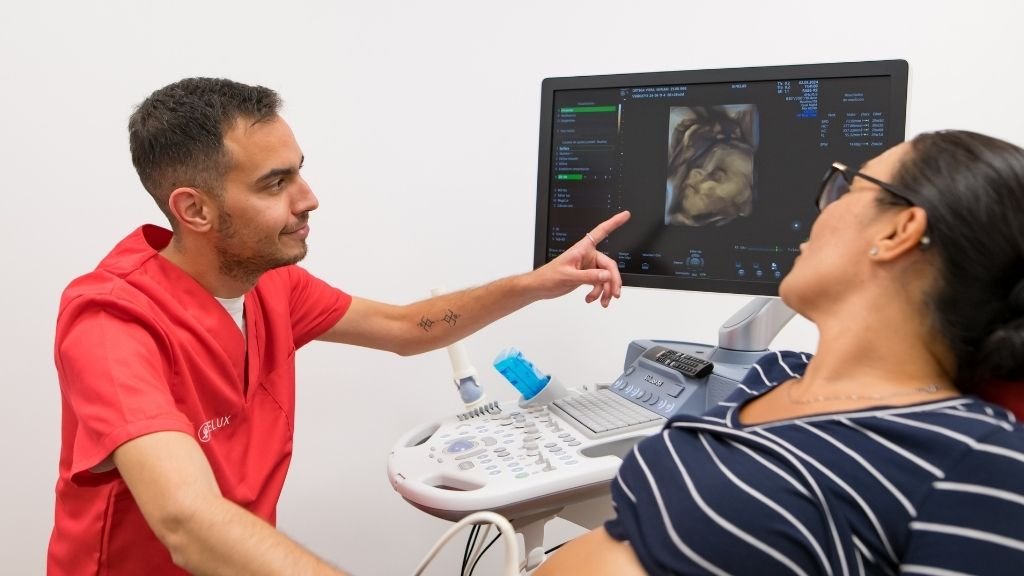
There are questions that many women ask themselves before their gynecological consultation and that rarely find a clear answer on the internet: what exactly is a gynecological ultrasound for? Does it hurt? When should it be ordered? If you are looking for a gynecologist in Las Palmas or anywhere in Gran Canaria and you want to understand what happens during this examination, this article is designed for you. Here you will find honest, useful and non-technical information.
What is a gynecological ultrasound and why is it so important?
A gynecologic ultrasound is an imaging test that uses ultrasound waves to visualize the female reproductive organs: the uterus, ovaries, endometrium and surrounding pelvic structures. It does not emit radiation, is non-invasive in its abdominal modality and, in most cases, does not produce any relevant pain.
What makes this exploration one of the most valuable within the general gynecology is its ability to provide information in real time. Unlike other analytical tests, ultrasound allows the specialist to see directly the state of the tissues, detect changes in the morphology of the organs and make clinical decisions immediately.
In gynecological clinics in Gran Canaria such as Ginelux, located in Telde with coverage for patients from Las Palmas, Vecindario, Maspalomas, Playa del Inglés, Agaete and the whole island, this test is part of the usual screening protocol. It is not something reserved for urgent cases or for patients with severe symptoms: it is a prevention and control tool that every woman should have access to perform periodically.
Types of gynecologic ultrasound: abdominal and transvaginal
When talking about gynecological ultrasound in Las Palmas or in any other city, two main variants are generally referred to.
Abdominal pelvic ultrasound
Abdominal pelvic ultrasound is performed by placing the transducer over the abdomen, with a full bladder to obtain a better acoustic window. It is the preferred option in certain situations, such as in patients who have never had sexual intercourse or when a wider view of the pelvis is needed. The image it provides is useful, although in terms of resolution it may be limited for detecting small lesions.
Transvaginal ultrasound in Las Palmas
Transvaginal ultrasound is the modality most commonly used in routine gynecological practice because it provides images of much greater clarity and detail. The transducer, covered by a sterile sheath and lubricated, is introduced a few centimeters into the vagina, allowing it to get physically close to the organs to be visualized.
This proximity is key to detecting small structures, assessing the thickness of the endometrium accurately, identifying ovarian cysts of a few millimeters or assessing the status of uterine fibroids. The discomfort it can generate is minimal and brief. At Ginelux, the gynecologists explain the procedure before performing it and answer any questions the patient may have.
What does a gynecological ultrasound detect?
The most frequent question that specialists receive before this test is precisely what can be seen in it. The answer is broad:
Uterine alterations
Ultrasound allows visualization of the size, shape and position of the uterus. It can be used to identify uterine fibroids, which are benign growths of the muscular tissue of the uterus, congenital malformations, intrauterine adhesions or signs that point to other pathologies.
Endometrial status
The endometrium is the inner layer that lines the uterus and varies in thickness throughout the menstrual cycle. A transvaginal ultrasound can accurately measure this thickness, which is essential for detecting endometrial hyperplasia, assessing the hormonal cycle or ruling out alterations in women who have irregular bleeding or in the menopausal period.
Ultrasound to detect endometriosis
Endometriosis is a chronic disease in which endometrial-like tissue grows outside the uterus, causing pain, inflammation and, in many cases, difficulty in conceiving. Transvaginal ultrasound is a very useful tool for detecting certain foci of endometriosis, especially ovarian endometriomas (chocolate cysts), although it does not replace other tests for complete diagnosis.
At Ginelux, both the medical director Ramón Santana García and the rest of the team, made up of specialists such as Mónica Álvarez Sánchez, Eleazar Bravo Moreno, Elena Torres Castellano, Rosa Rodríguez de la Mano, Lucía González Sánchez and Marta de Luis, work with an approach oriented to the precise diagnosis and accompaniment of each patient.
Ultrasound for ovarian cysts
Ovarian cysts are very common and most are functional, that is, they form as part of the normal menstrual cycle and disappear on their own. However, some cysts have characteristics that require follow-up or intervention. Ultrasound makes it possible to assess the size, shape, content and blood flow characteristics of a cyst, which guides the specialist as to whether periodic monitoring or more active action is necessary. In cases where treatment is required, the team of gynecological surgery can be approached with minimal invasiveness.
Gynecologic ultrasound and fertility
In the context of the fertility study, gynecological ultrasound is essential. It makes it possible to count the antral follicles in the ovaries, which gives an estimate of the ovarian reserve, to visualize the endometrium at the most favorable time of the cycle for implantation, and to rule out structural abnormalities that could interfere with pregnancy. A transvaginal ultrasound is usually performed at the first fertility consultation as part of the initial assessment.
Symptoms requiring a gynecological ultrasound scan
It is not always necessary to wait for serious symptoms to ask for an ultrasound. However, there are situations in which a consultation with a private gynecologist in Las Palmas or in any town of Gran Canaria, such as Telde, Vecindario or Maspalomas, should not be postponed:
Bleeding outside the usual menstrual period, including bleeding after menopause, is a clear sign to seek an assessment. Persistent pelvic pain, whether constant or occurring at specific times in the cycle, also warrants attention. Very irregular, excessively heavy or painful menstrual cycles may have structural causes behind them that ultrasound helps to identify. The same applies to the sensation of pressure in the pelvis, difficulties in getting pregnant or suspected ovarian cysts detected in previous check-ups.
When to perform a gynecological ultrasound as a preventive measure
Beyond the symptoms, there are key moments in a woman's life when it is appropriate to incorporate gynecologic ultrasound as part of her regular health checkup:
The annual gynecological check-up is the most natural context for this test. Combined with other examinations, it provides a complete picture of the state of the reproductive organs and allows changes to be detected before they become problematic. In the stages close to menopause, ultrasound becomes particularly relevant because the endometrium and ovaries undergo significant changes that should be monitored. During pregnancy, ultrasounds are part of the obstetric follow-up and have different objectives, but in the pre-pregnancy period they are also useful to rule out any condition that could complicate the process.
The control of the menstrual cycle by serial ultrasound, that is, by performing scans at different times of the cycle, is used both in the study of ovulation and in the follow-up of hormonal treatments.
Gynecologic ultrasound in Gran Canaria: where and with whom to have it done
Finding a gynecological clinic in Las Palmas or Gran Canaria where the ultrasound is performed with updated equipment and within a personalized consultation is not always easy. The difference between a well-performed examination and a hasty one can determine whether a pathology is detected in time or not.
Ginelux, based in Telde, serves women from all over the island: from the northernmost areas, such as Agaete, to the south, where many patients from Maspalomas, Playa del Inglés and Vecindario live. The practice is also accessible to those who live in Las Palmas de Gran Canaria and are looking for a private gynecologist with proven experience.
The price of a gynecological ultrasound in Las Palmas or nearby may vary depending on the type of examination, whether it is abdominal or transvaginal, and whether it is included in a complete gynecological examination or is performed independently. It is best to consult directly with the clinic to obtain updated and personalized information.
Quality gynecological diagnostics: the role of the medical team
Gynecological ultrasound is not just an image: it is the interpretation made by a specialist with clinical criteria and experience. At Ginelux, the medical team is made up of gynecologists with specific training in gynecological imaging. Each examination is integrated into a complete clinical history, evaluated in context and clearly explained to the patient.
This approach, which puts the patient at the center and avoids a cold and decontextualized diagnosis, is what differentiates a gynecological clinic committed to women's health from a merely technical practice.
Frequently asked questions about gynecologic ultrasound
Does a transvaginal ultrasound hurt?
How long does a gynecological ultrasound take?
Is there any preparation needed before the ultrasound?
How often should a gynecological ultrasound be performed?
Does gynecological ultrasound detect cancer?
If you have doubts about your gynecological health, do not wait for the symptoms to increase. Make an appointment with the Ginelux team and we will accompany you from the beginning. You can contact us through our website: https://ginelux.com/contacto/