




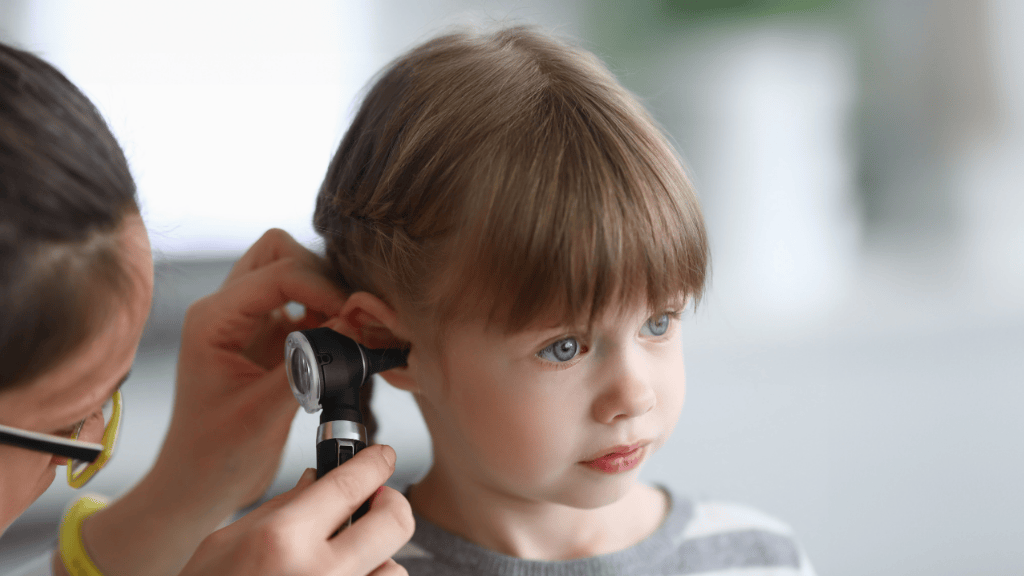
Otitis in children is one of the most frequent causes of consultation in pediatrics in Gran Canaria, especially in infants and children under five years of age. Ear pain can appear suddenly, often after a cold, and generates a lot of concern in families who do not know when to go to the pediatrician.
If you live in Telde, Las Palmas, Vecindario, Agaete, Playa del Inglés, Maspalomas or any area of Gran Canaria or any other city, it is important to know how to recognize the symptoms of infantile otitis and differentiate a mild discomfort from a situation that requires medical evaluation.
What is otitis in children and why is it so common?
Otitis is an inflammation of the ear that can affect different areas. In childhood, the most common is otitis media, which affects the middle ear and is usually related to respiratory infections.
In the first years of life, the Eustachian tube, the duct that connects the nose and ear, is shorter and more horizontal than in adults. This makes it easier for secretions from a cold to accumulate in the middle ear and promote inflammation. For this reason, infantile otitis is more frequent in infants and young children, especially during autumn and winter.
Types of otitis in children and their differences
Not all otitis in children is the same. Although the main symptom is usually ear pain, the origin and evolution may vary depending on the affected area. Knowing the most common types helps to understand why the treatment is not always the same.
Acute otitis media
It is the most common form in childhood. It appears quickly, usually after a cold. It is characterized by:
- Severe ear pain
- Fever in many cases
- Irritability in infants
- Feeling of pressure
In this situation, the middle ear becomes inflamed and fluid may accumulate behind the eardrum. It is the type of infantile otitis that most frequently motivates consultation with the pediatrician in Las Palmas or Telde.
Otitis media serosa (with fluid)
In this case there is not always severe pain. What occurs is an accumulation of fluid in the middle ear without clear signs of active infection. It may cause:
- Sensation of plugged ear
- Temporary hearing impairment
- Difficulty hearing clearly
- Reduced response to sounds in young children
It often appears after acute otitis media or after a cold. In most cases it resolves on its own, although it may require follow-up if it persists.
Otitis externa
It affects the external auditory canal, i.e. the visible part of the ear. It is more frequent in summer and after exposure to water (swimming pool or beach). Its symptoms are usually:
- Pain when touching the ear
- Chewing discomfort
- Inflammation of the duct
- Occasionally discharge
Unlike otitis media, the pain usually increases with pressure on the outer ear.
Why it is important to differentiate between otitis
Although they are all called “otitis”, the management may be different depending on the type. For this reason, an otoscopic examination by a pediatrician is essential to confirm the diagnosis and decide on the appropriate treatment. Not all require antibiotics, and not all have the same evolution.
Symptoms of childhood otitis according to age
Symptoms may vary depending on the age of the child.
In infants
- Intense and inconsolable crying
- Touching or rubbing the ear
- Marked irritability
- Difficulty sleeping
- Fever
In older children
- Localized ear pain
- Feeling of pressure
- Fever
- Temporary hearing impairment
- Outflow of fluid from the ear in some cases
When these symptoms appear, many families wonder when to go to the pediatrician. Many parents consult for intense crying in young babies without knowing if it is an otitis or other common causes such as infant colic. If you want to better understand how to differentiate between the two conditions, you can read our article on colic in babies and when to go to the pediatrician: Infant colic: what it is, how long it lasts and when to consult a pediatrician in Las Palmas.
Typical course of otitis in children
Acute otitis media usually evolves like this:
- First 24 hours: severe pain and possible fever.
- 48-72 hours: pain usually starts to improve if treatment is adequate.
- Later days: the sensation of a blocked ear may persist.
In some mild cases, it may improve without antibiotics, but it should always be evaluated by a pediatrician in Las Palmas or Telde.
How is otitis assessed in pediatric consultation?
In a private pediatric clinic, the assessment of possible otitis in children is not limited to confirming whether there is ear pain. The examination is complete and oriented to determine the type of inflammation and the real need for treatment.
During the consultation, the pediatrician performs:
- Otoscope examination to observe the eardrum, detect inflammation, fluid accumulation or signs of infection.
- Assessment of the child's general condition, including activity level, hydration and response to the environment.
- Temperature control and analysis of other associated symptoms, such as cough, nasal congestion or general malaise.
- Assessment of recent history, such as colds or previous episodes of otitis.
The indication for specific treatment, including antibiotics, is not based solely on the presence of pain. It depends on several factors: the age of the child, the intensity of the symptoms, the duration of the symptoms and the findings on examination.
At Ginelux, pediatrician Marta García Murcia and pediatrician Alberto Florido Rodriguez perform an individualized follow-up in Telde and Las Palmas, always prioritizing a clinical decision based on the complete evaluation of the child and not only on the isolated symptom.
Mild otitis vs. otitis requiring immediate attention
The following table helps to differentiate frequent situations:
| Situation | Can wait for scheduled appraisal | Requires urgent assessment |
|---|---|---|
| Mild pain without high fever | ✔ | |
| Fever higher than 38-38.5°C persistent | ✔ | |
| Active child between episodes | ✔ | |
| Significant decay | ✔ | |
| Ear discharge | ✔ | |
| Infant less than 6 months old | ✔ |
In case of warning signs, it is advisable to make an appointment with a pediatrician in Gran Canaria as soon as possible.
Frequent errors in infantile otitis
When a child presents with ear pain, concern may lead to quick decisions that are not always the most appropriate. However, in the case of otitis in children, clinical assessment is essential before starting any treatment.
Some of the most common errors are:
- Administer antibiotics left over from a previous episode without reexamination. Each otitis may have a different cause and does not always require the same approach.
- Using ear drops without a clear diagnosis. Not all ear complaints correspond to the same type of otitis, and in some cases ear drops are not indicated.
- Wait several days with persistent high fever thinking it will “go away on its own”. Sustained fever may require evaluation to rule out complications.
- Assume that all otitis needs antibiotics. Some mild infections may resolve with pain control and monitoring, especially in older, well-functioning children.
Self-medication can not only delay proper treatment, but also make subsequent assessment by the pediatrician more difficult.
When faced with ear pain, it is best to undergo a medical examination to confirm the diagnosis and decide on the most appropriate treatment according to age, symptoms and clinical course.
How to prevent otitis in children and when to go to the pediatrician in Las Palmas or Telde
Otitis in children cannot always be prevented, especially during the first years of life, when the immune system is still maturing. However, there are measures that help to reduce the risk and to detect possible complications early.
Measures that can reduce the frequency of otitis in children
Although they do not completely eliminate the risk, these guidelines may help to reduce repeat episodes:
- Maintain proper hand hygiene, especially in times of respiratory infections.
- Avoid exposure to tobacco smoke, which increases airway inflammation.
- Maintain the vaccination schedule up to date.
- Adequately treat and control colds and respiratory processes.
- Promote a healthy environment at home and in childcare.
The regular follow-up within the program of children's health allows to identify children with a greater predisposition to recurrent infections and to assess additional measures if necessary.
Frequently asked questions about otitis in children
How do I know if my child has otitis?
How long does otitis last in children?
Does otitis in children always need antibiotics?
Is it normal for otitis to return several times?
When should I take my child to the pediatrician for ear pain?
Can otitis affect hearing?
Does your child have ear pain?
If you suspect otitis in children and you want an appointment with a pediatrician in Telde or Las Palmas, you can request an appointment with the pediatrician at Ginelux through our contact form.