




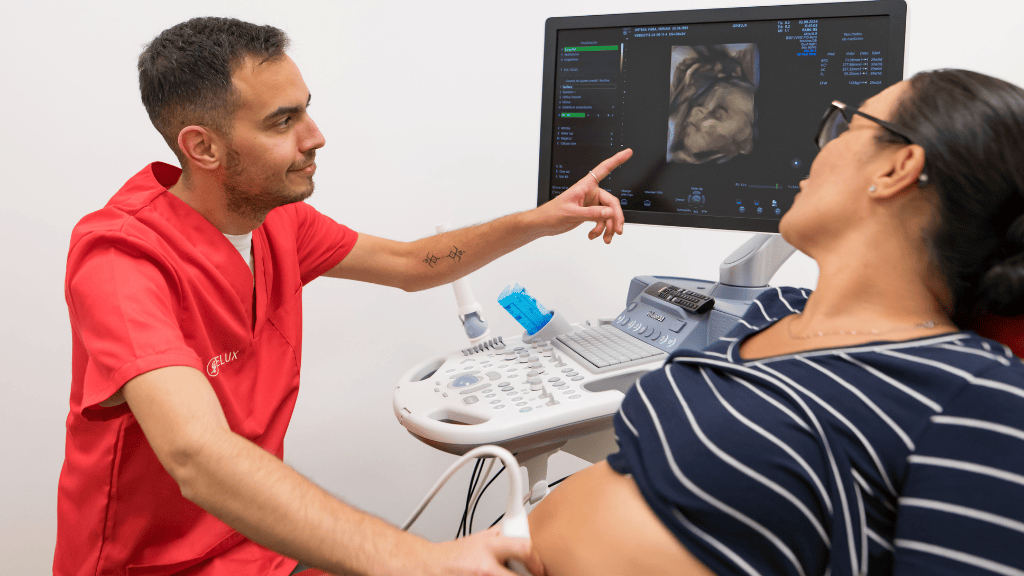
Pregnancy controls are the basis of a safe and structured pregnancy follow-up. Having an obstetrician in Las Palmas to plan pregnancy tests by trimester allows early detection of any alteration and to accompany each stage with clear information.
If you are looking for a private obstetrician in Gran Canaria, whether in Telde, Las Palmas or in municipalities such as Vecindario, Agaete, Playa del Inglés or Maspalomas, understanding what happens in each trimester will help you live your pregnancy with greater peace of mind.
What is included in the pregnancy follow-up with a private obstetrician?
Private prenatal care is not just about performing pregnancy ultrasounds. It is a continuous medical accompaniment that combines clinical examination, analytical, imaging tests and health education. An obstetrician in Gran Canaria evaluates in each consultation:
- General condition of the mother
- Weight and blood pressure
- Uterine growth
- Fetal well-being
In addition, it adapts the testing schedule to the personal history and the evolution of the pregnancy. In a pregnancy clinic in Las Palmas, the follow-up is usually structured by trimester to facilitate an orderly and complete monitoring.
Pregnancy checks by trimester
Before going into each stage in detail, this table summarizes how the pregnancy follow-up with your obstetrician in Las Palmas is organized:
| Quarter | What is evaluated | Main tests | Objective of the control |
|---|---|---|---|
| First quarter | Feasibility confirmation and initial risk assessment | Initial CBC, ultrasound 11-13 weeks | Detect risk factors and establish clinical baseline |
| Second quarter | Anatomical development and metabolic control | Morphological ultrasound, glucose test | Evaluate fetal structure and rule out gestational diabetes. |
| Third quarter | Fetal growth and preparation for delivery | Growth ultrasound, tension control | Monitor fetal well-being and plan birth |
First trimester: confirmation and initial risk assessment
The first trimester is critical because it allows us to confirm the viability of the pregnancy and establish a solid basis for follow-up. At the first consultation, the private obstetrician takes a complete medical history, reviews the history and schedules the initial tests.
The analysis includes blood group, hemogram and usual serologies. These tests can detect anemia, Rh incompatibilities or infections that may require specific follow-up.
One of the most important pregnancy ultrasounds is performed between weeks 11 and 13. It confirms the fetal heartbeat, measures the nuchal fold and performs an initial structural assessment. This test is a key part of pregnancy monitoring because it provides relevant information on early development.
Second trimester: morphological study and metabolic control.
During the second trimester, pregnancy monitoring focuses on analyzing in detail the anatomical development of the baby.
The morphologic ultrasound, around week 20, allows to check internal organs, cardiac structure, spine and extremities, in addition to assessing placenta and amniotic fluid.
During this period, screening for gestational diabetes is also performed using the O'Sullivan test. Although many women have no symptoms, this test can detect metabolic alterations that require specific monitoring.
Third trimester: growth and preparation for delivery
In the last trimester, private prenatal care is aimed at monitoring fetal growth and preparing for birth.
Pregnancy ultrasounds make it possible to estimate the weight of the baby, assess the amount of amniotic fluid and confirm the fetal position. In addition, parameters such as blood pressure are monitored and possible signs of premature labor are detected.
In the last weeks, the obstetrician in Gran Canaria reviews the birth plan and provides guidance on signs of onset of labor, helping the mother to recognize when to go to the hospital.
Differences between private prenatal care and standard follow up
The medical objective of pregnancy follow-up is the same in any setting: to ensure maternal and fetal health. However, the care experience may vary according to the type of follow-up chosen.
Many women opt for a private obstetrician in Gran Canaria because they are looking for a more continuous and personalized accompaniment. In this context, it usually exists:
- More time in consultation to resolve doubts calmly
- Continuity with the same professional throughout the pregnancy
- More detailed explanations of tests and results
- Greater flexibility in scheduling and appointment organization
In a pregnancy clinic in Las Palmas, private prenatal care allows to adapt the schedule of visits to the individual evolution of each woman, strengthening the doctor-patient relationship and the feeling of accompaniment.
It is important to note that opting for a private obstetrician does not imply replacing medical security, but rather integrating a more personalized follow-up within established clinical standards.
When to go before the next check-up
Although pregnancy check-ups are organized by trimester, there are situations when it is not convenient to wait for the next scheduled appointment.
Pregnancy monitoring is preventive, but certain symptoms should be evaluated immediately. It is advisable to consult your obstetrician in Las Palmas if they appear:
- Vaginal bleeding
- Severe or persistent abdominal pain
- Clear decrease of fetal movements in late stages
- Fever without apparent cause
These signs do not always indicate a serious complication, but they do require medical evaluation to rule out any alteration.
Private prenatal care provides peace of mind and structured follow-up, but is not a substitute for urgent care when new or unexpected symptoms arise.
Comprehensive monitoring in Gran Canaria
Choosing an obstetrician in Las Palmas or an obstetrician in Gran Canaria implies valuing experience, proximity and trust. At Ginelux Clinica Maternoinfantil, in Telde, the follow-up is coordinated between obstetrics, midwives and pediatrics, offering continuity of care from pregnancy to birth.
This comprehensive approach makes it easier for families in Telde, Las Palmas and other areas such as Vecindario, Agaete, Playa del Inglés or Maspalomas to carry out their check-ups with comfort and medical consistency.
Frequently asked questions about pregnancy controls
How many consultations are performed during pregnancy?
Are all trimester pregnancy tests mandatory?
When is the first pregnancy ultrasound performed?
Is a private obstetrician recommended in Gran Canaria?
Can I change obstetricians during pregnancy?
Looking for an obstetrician in Las Palmas for your follow-up pregnancy?
If you are pregnant and want to do your pregnancy check-ups with a private obstetrician in Gran Canaria, in Ginelux Maternal and Child Clinic in Telde we accompany you during each trimester with a clear, close and evidence-based approach.
You can request information or make an appointment through our contact form.