



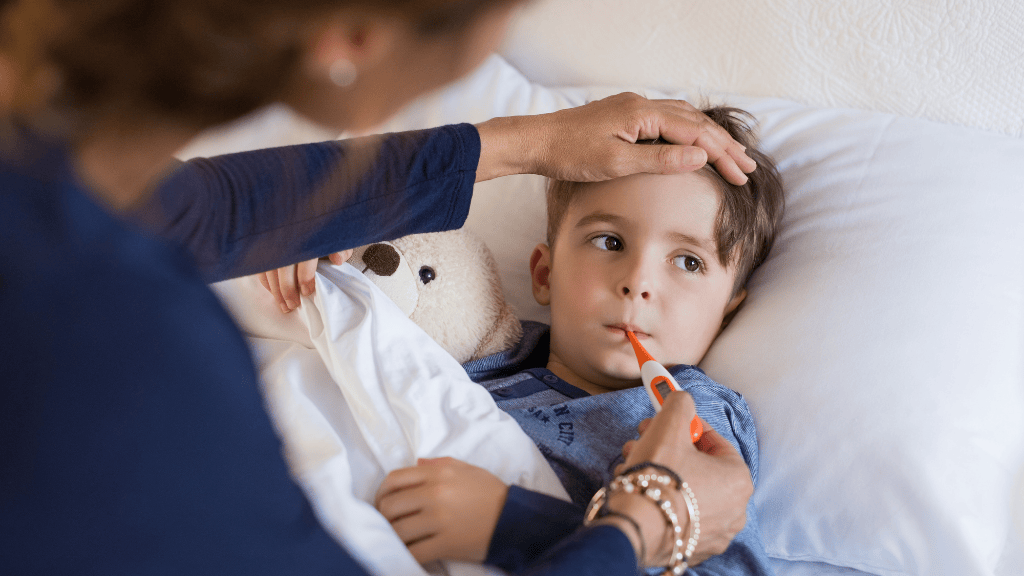
Fever in children is one of the most common reasons for consultation in pediatrics and, at the same time, one of the most worrying situations for mothers and fathers. Seeing your child with fever can set off many alarms, even when the child is relatively well.
In this article we explain clearly what a fever is, why it appears, when it is normal and when it is convenient to consult, as well as sharing practical advice from our pediatrician in Las Palmas and Telde, Marta García, to manage it calmly at home.
What is fever in children and why does it appear?
Fever in children and adults is not a disease, but a symptom. It occurs when the body raises its temperature as part of the immune system's response to infection or inflammation.
In infancy, this mechanism is especially frequent because the defensive system is in the process of maturing. Therefore, childhood fever is common in babies, infants and young children, especially during the first years of life.
In most cases, fever in children and adults serves a positive function: it helps the body fight viruses and bacteria.
From what temperature is considered fever in children?
Normal temperature in children may vary slightly depending on the time of day and method of measurement. As a guideline:
- Axillary: fever from 37,5-38 °C
- Oral: fever from 38 °C
- Rectal: fever from 38°C onwards
It is important to understand that a high fever in children does not always imply severity. The number alone does not determine urgency, the clinical context is key.
Fever in children: most frequent causes
The causes of fever in children are usually benign and self-limiting. Among the most common are:
- Viral infections, such as colds, flu or gastroenteritis, are the most common cause.
- Bacterial infections such as otitis, pharyngitis or urinary tract infections may also occur.
- In some cases, fever appears after vaccination or in mild inflammatory processes.
In areas such as Telde, Las Palmas, Vecindario, Agaete, Playa del Inglés or Maspalomas, it is very common for children to present fever associated with seasonal viral infections.
Fever in babies and infants: when to exercise extreme caution
Fever in infants younger than 3 months always requires medical evaluation. In newborns and young infants, signs of illness may be more subtle and evolve rapidly.
It is also advisable to consult a pediatrician in Las Palmas, Telde or in your city of residence if there is one:
- Persistent fever in young children
- Fever that does not go down with usual measures
- Changes in behavior, inconsolable crying or difficulty feeding
If you have any doubts, it is advisable to visit a pediatrician in Telde, Las Palmas or in your place of residence for a face-to-face evaluation.
Symptoms that may accompany childhood fever
Fever in children may occur alone or accompanied by other symptoms. Some of the most frequent symptoms are weakness, irritability, lack of appetite or chills.
In other cases fever and vomiting in children, fever and diarrhea, fever and headache or night fever may occur. It is also common for fever to rise at night due to the body's natural rhythms.
Again, the key is to look at how the child is doing as a whole.
What to do about fever in children: care at home
When a child has a fever but his general condition is good, simple measures can be applied at home.
Hydration is key if your child has a fever. Offering fluids frequently helps prevent dehydration, especially if there is a persistent fever. The environment should be cool and the child should wear light clothing, avoiding overdressing.
Rest is important, but it is not necessary to force the child to stay in bed if he or she is relatively active.
Fever medication for children: when and how to use it
The goal of treatment is not to eliminate the fever, but to improve the child's well-being. In some cases paracetamol or ibuprofen may be used.
Paracetamol for fever in children and ibuprofen for fever in children should always be administered adjusting the dose to weight and age, following medical indications. Medications should not be alternated without professional supervision.
If you have doubts about the adequate dosage, the best thing to do is to consult your trusted pediatrician. At Ginelux, our medical center that serves patients in Las Palmas, Telde and other locations in Gran Canaria, we offer pediatrics services for all ages.
Common mistakes in managing childhood fever
One of the most common mistakes when a fever appears in children is to focus only on lowering the temperature, without taking into account how the child is feeling in general. A child with a fever who plays, responds and maintains a good mood is not handled in the same way as one who is run down or irritable.
It is also common to overdress, thinking that this protects the child, when in fact this can hinder the natural regulation of body temperature and increase discomfort.
Another common mistake is to resort to cold water baths or abrupt measures to reduce fever. These practices are not recommended and can generate discomfort and stress in the child.
Finally, the use of antibiotics without medical indication not only does not help in most cases, since many fevers are of viral origin, but can have unnecessary consequences. When in doubt, it is always best to consult a trusted pediatrician in Las Palmas or in your city of residence.
When to be concerned about fever in children
Although childhood fever is usually a benign process, there are situations in which it is advisable to make an appointment with a pediatrician for a more detailed assessment of the child.
It is advisable to make an appointment with a pediatrician if the child has a fever:
- It is maintained for more than 48-72 hours
- Persistently exceeds 39 °C
- It is accompanied by a very depressed general state, intense irritability or lack of response.
- It is associated with febrile convulsions.
- Appears in infants younger than 3 months
These criteria help to differentiate the usual episodes of childhood fever from those that require a more specific medical evaluation.
Fever in children: when to go to the emergency room
In some specific cases, fever in children may be a warning sign and it is important to go to an emergency department without delay.
You should seek urgent care if the child presents:
- Shortness of breath or rapid breathing
- Neck stiffness or severe pain on neck movement
- Skin blemishes that do not disappear when pressed
- Altered level of consciousness, excessive drowsiness or difficulty in waking up
- Rapid worsening of general condition
In the presence of any of these symptoms, it is essential not to delay the evaluation of a pediatrician.
Fever in children: the key message from our pediatrician
In this video posted on Instagram, our pediatrician conveys a fundamental idea that is always worth remembering:
Fever is scary, but it is not always a sign of seriousness. In most cases, it is simply the child's body's way of defending itself against infection.
As our pediatrician Marta García Murcia explains, what is important is not only the number on the thermometer, but how the child is doing in general. A child with a fever who plays, responds and is active usually does well with basic care and observation.
Its main recommendations are clear and simple:
- Maintaining good hydration
- Avoid overdressing
- Observe the general condition, not only the temperature.
- Consult if there are doubts or if something does not add up.
This approach helps to reduce anxiety and make more confident decisions.
Close pediatric accompaniment in Gran Canaria
At Ginelux, the team of pediatrics accompanies families from a close approach, based on observation and trust. In addition to Marta García Murcia, the team includes professionals such as Alberto Florido Rodríguez, who work in a coordinated manner in the care of the child. children's health.
Frequently asked questions about fever in children
How long does fever usually last in children?
Is high fever in children dangerous?
Does the fever rise more at night?
Can a child with fever be bathed?
When should I take my child to the pediatrician if he/she has a fever?
Where to go if my child has a fever in Las Palmas or Telde?
If you need to solve doubts or ask for an appointment with a pediatrician in Telde or Las Palmas, you can contact us using this contact form.